Abstract:
Nanosensors are one type of sensors. Others include bio-sensors, catalytic sensors, electrochemical sensors etc. Nanosensors are nanoscale devices that are constructed to identify a particular molecule, biological, medicinal or environmental component and operate within the nanoscale dimensions. Nanosensors convert chemical data such as the concentration of a single sample component to complete composition analysis into an analytically usuable signal. Nanosensors are quite superior to conventional sensor and possess several advantages over conventional sensors. These include amongst others: greater adsorptive capacity due to large surface area to volume ratio, greater modulation of electrical properties such as capacitance, resistance etc. upon exposure to analytes, exceptional electrical conductivity and compatibility with biological systems. Nanosensors have found applications in several realms such as agriculture, biology, chemistry, physics, medicines, environmental, gas sensing, industrially, in the aerospace and defence industry. Research in nano sensor technology is proliferating.
Keywords: Nanosensors, nanoscale dimensions, medicinal, environmental, aerospace, defence industry
Biography:
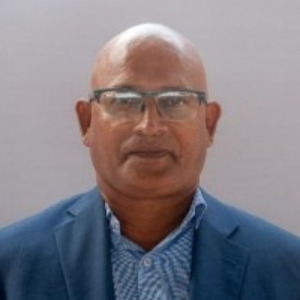
Prof. Raymond Jagessar obtained his BSc (Distinction) in Chemistry/Biology from the University of Guyana (1992) and his PhD from the UK (1995). He was Assistant Lecturer at the University of Guyana, 1991-1992. He held three Post Doctoral Research Fellowships (PDF) at the University of South Carolina, Columbia (USA), Wichita State University, Kansas (USA) and the University of the West Indies during the period, 1996 1999. He is also accredited with a distinction in DiPEd (higher education) at the University of Guyana in 2022. He has several international awards, amongst them are Chartered Chemist, CChem, Fellow of the Royal Society of Chemistry, FRSC, UK, Research Grants etc. He is an awardee of the Guyana Innovation Prize and a Fellow of the Caribbean Academy of Sciences. His research interests are broad, covering the spectrum of Pure and Applied Chemistry, Chemical Biology and Pharmaceutical Chemistry. He has published over one hundred (100) research articles, five book chapters, one book, three e-books and presented at over 100 conferences locally, regionally and internationally. He has given keynote presentations at several conferences at the international forum. He is a member of several editorial boards and reviewer to several journals. He is currently Professor of Chemistry at the University of Guyana (South America), former President of the Caribbean Academy of Sciences (2020-2023) and currently, Foreign Secretary of the Caribbean Academy of Sciences.